Luxury in Bethesda now blends quiet comfort, wellness, and resilience with refined design. If you are shopping or preparing to sell a high‑end home here, you are likely weighing features that elevate daily living while keeping long‑term costs in check. This guide shows you which sustainable luxury upgrades resonate in Bethesda, how local policies make them practical, and what to look for when you evaluate a property. Let’s dive in.
Why sustainable luxury is rising in Bethesda
Bethesda’s buyers value comfort, healthy indoor air, and predictable operating costs. Local policy also supports better building performance. Montgomery County adopted the 2021 building code suite with local amendments, which raises efficiency and performance expectations for new construction and major renovations. You can review the county’s adoption details in the county’s Executive Regulations for 2024, effective December 10, 2024, which outline stricter energy provisions for projects submitted after the plan‑review cutoff (Montgomery County’s adopted 2021 code suite).
The county also streamlines permitting for residential solar through its eSolar pathway. This expedited process can reduce soft costs and shorten the timeline to get rooftop PV online, which matters when you are managing a move or renovation schedule (Montgomery County’s eSolar permit process).
On the utility side, Pepco offers Home Performance with ENERGY STAR audits and electrification rebates. Many incentives are sequenced, so completing insulation and air sealing first can unlock larger rebates for heat pumps and related equipment (Pepco program FAQs). State programs exist too, but they change by fiscal year and are often first‑come, first‑served.
Top sustainable luxury features to consider
High‑performance building envelope
A high‑performance envelope focuses on better insulation, triple or high‑efficiency windows, and tight air sealing verified by blower‑door testing. In Climate Zone 4, attics often target R‑49 to R‑60, and many projects add continuous exterior insulation to cut thermal bridging. With less heat loss and fewer drafts, you get steadier temperatures, smaller and quieter HVAC equipment, and lower utility bills. For baseline R‑value guidance by climate zone, see ENERGY STAR’s recommendations (ENERGY STAR insulation R‑values).
What to ask:
- What is the attic insulation level and wall assembly detail?
- Is there a blower‑door report, and what is the ACH50 result?
- Are windows documented with U‑factor and SHGC ratings?
Electrified heating, cooling, and hot water
Modern cold‑climate heat pumps provide reliable warmth, precise zoning, and quiet operation. Field research from NREL documents strong performance of today’s air‑source heat pumps in cold conditions, which aligns well with Bethesda’s climate (NREL research on cold‑climate heat pumps). Pairing space‑conditioning heat pumps with a heat‑pump water heater can cut on‑site fossil fuel use while improving comfort.
Incentive tip: Pepco and related programs often require weatherization upgrades first. An audit that leads with insulation and air sealing can help you qualify for larger heat‑pump rebates and achieve better real‑world comfort (Pepco program FAQs).
What to ask:
- What model and capacity were installed, and when was commissioning completed?
- Are documentation and ratings available (SEER, HSPF, COP)?
- Was a home performance audit completed before installation?
Solar PV and battery storage for resilience
Rooftop solar sized to your household’s demand can offset much of your electricity use. Battery storage adds resilience, keeps critical loads powered during outages, and can shift solar production to evening use. Montgomery County’s eSolar program can speed permitting for qualified installers, which helps with project planning.
In Maryland, net metering rules define how you are credited for the excess energy your system exports and how annual reconciliation works. Understanding those credits is key to modeling payback and sizing a system appropriately (Maryland COMAR net metering). For cost context, recent marketplace data show typical installed residential solar prices often land around the low‑to‑mid five figures for a 10 to 12 kW system, before incentives. Actual pricing varies by equipment, roof complexity, and installer (EnergySage solar cost benchmarks).
Important timing note: Federal residential energy credits that materially reduced upfront costs applied to property placed in service through December 31, 2025. If you are planning a late‑2025 or 2026 installation, verify eligibility before you model payback or make tax assumptions (IRS Form 5695 instructions).
What to ask:
- What is the system size (kW), interconnection approval date, and battery capacity (kWh)?
- How are net‑metering credits reconciled, and what is the annual true‑up date?
- Are monitoring, warranty, and installer commissioning documents on file?
EV‑ready garages and charging infrastructure
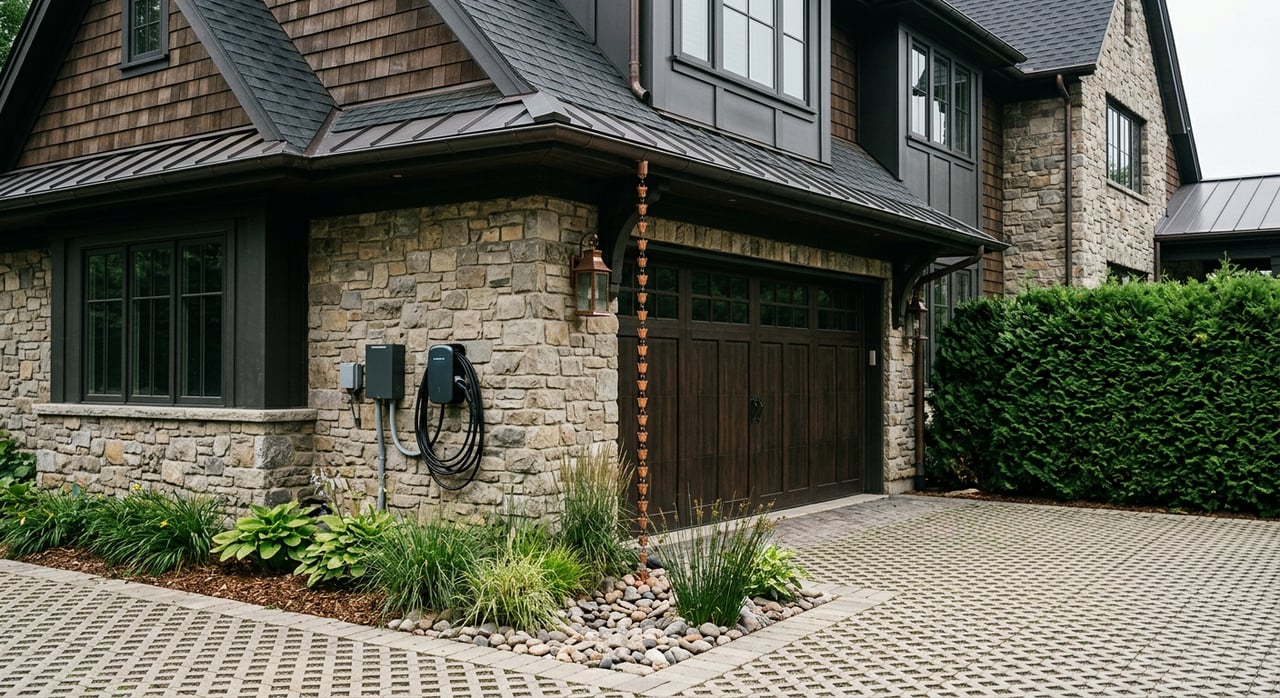
A luxury garage that is EV‑ready is both a convenience and a future‑proofing move. Look for at least one dedicated 240‑volt Level 2 circuit, panel capacity for a second port, and a smart charger that can schedule charging. In new builds, pre‑installed conduit and a 60‑amp circuit are common high‑end provisions. Montgomery County’s adoption of the 2021 code suite and related guidance put more emphasis on EV readiness in residential projects (overview of county code adoption and EV‑ready context).
Installation costs vary with distance to the panel and whether a service upgrade is needed. Many standard Level 2 installs land in the low‑to‑mid thousands, while panel or service upgrades add more. A turnkey, dual‑port solution is a strong resale talking point.
What to ask:
- Is there a hardwired Level 2 charger or dedicated 240‑volt circuit in place?
- What is the electrical service size, and is there spare breaker capacity?
- Are charger manuals and permits available?
Smart energy management and wellness
Smart home energy management systems can coordinate solar, batteries, EV charging, and HVAC to optimize comfort and cost. When paired with commissioning, these systems make your home easier to run day to day. The Department of Energy’s Building America program highlights integrated HEMS solutions as a growing path to better efficiency and user experience (DOE Building America resources).
Wellness features matter too. A tight home should include balanced mechanical ventilation with an HRV or ERV, filtration at MERV‑13 where the system allows, and low‑VOC finishes. Documented IAQ upgrades and ventilation commissioning reports are valuable for both comfort today and resale tomorrow.
What to ask:
- Is there a whole‑house HRV or ERV, and was it balanced at install?
- What is the filtration level, and how often are filters changed?
- Are IAQ sensors installed for CO2, VOCs, or PM2.5?
Buyer and seller playbook in Bethesda
If you are buying, focus on comfort and documentation. Ask for blower‑door results, insulation details, HVAC commissioning reports, and solar interconnection approvals. Verify any incentive claims with placed‑in‑service dates and keep net‑metering rules in mind for solar payback.
If you are selling, organize a clean sustainability dossier. Include energy ratings or audits, envelope and window specs, HVAC and IAQ commissioning records, solar and battery paperwork, and EV‑charging permits. Clear documentation reduces buyer friction and signals a well‑cared‑for home.
Costs, incentives, and timing to watch
- Solar pricing varies by roof and equipment, but market data often place full‑size residential systems in the low‑to‑mid five figures before incentives. Batteries add several thousand to tens of thousands depending on capacity and configuration (EnergySage solar cost benchmarks).
- Pepco programs can improve project economics when you complete weatherization steps before installing a heat pump. Plan sequencing early to maximize potential rebates (Pepco program FAQs).
- State programs through the Maryland Energy Administration are periodic and budget dependent. Treat them as opportunistic rather than guaranteed.
- Federal credits that applied through December 31, 2025 affect ROI models for work completed after that date. Always confirm eligibility windows before you make tax or pricing assumptions (IRS Form 5695 instructions).
Ready to align a Bethesda home to your comfort, wellness, and sustainability goals? For discreet, LEED‑informed guidance tailored to your lifestyle, reach out to The Jill Schwartz Group for a private consultation.
FAQs
What are the most valuable sustainable luxury features in Bethesda homes?
- High‑performance envelopes, heat pumps, solar plus battery storage, EV‑ready garages, and smart energy and wellness systems deliver comfort, resilience, and lower operating costs.
How does Montgomery County speed up residential solar installs?
- The county’s eSolar pathway uses standardized reviews to streamline permitting, which can reduce soft costs and accelerate installation timelines for qualified projects.
Do modern heat pumps keep Bethesda homes warm in winter?
- Yes. Field research shows today’s cold‑climate air‑source heat pumps perform well in cold conditions when properly sized and commissioned.
How does Maryland net metering impact solar payback?
- Net‑metering rules credit exported energy and reconcile annually, so understanding credit rates and true‑up timing helps you right‑size a system and model savings accurately.
What documents help resale for a sustainable luxury listing?
- Provide insulation and window specs, blower‑door and ventilation commissioning reports, HVAC and IAQ maintenance logs, solar interconnection approvals, battery commissioning, and EV‑charging permits.
Are federal energy tax credits still available for projects completed in 2026?
- The credits referenced here applied to property placed in service through December 31, 2025, so verify current eligibility before making tax or pricing assumptions.